
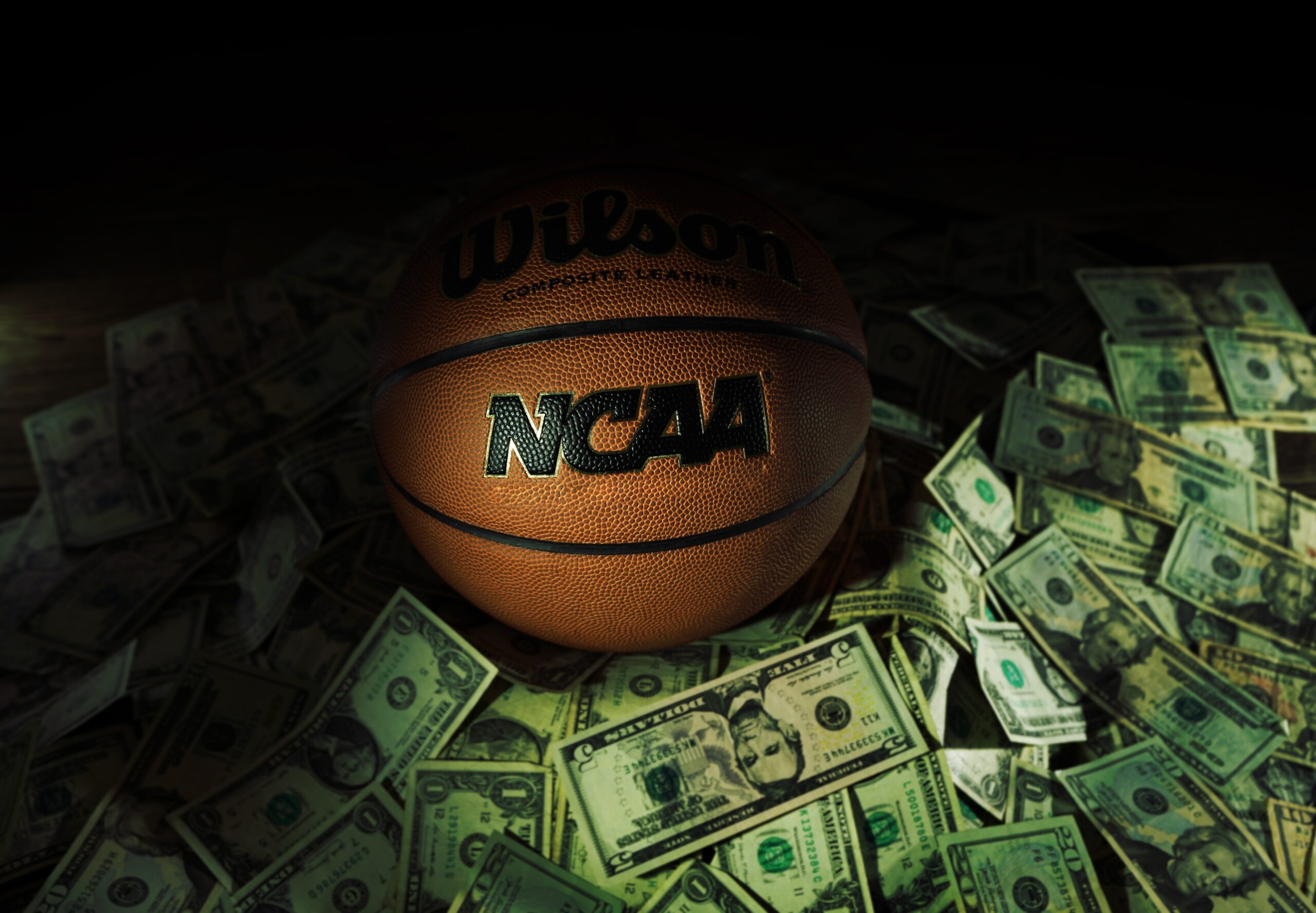
United States v. Smith et al.: Federal Indictment Charges Alleged Multi-Defendant Fraud and Conspiracy Scheme
By Tyla Swinton and Lucia Mead
Legalized sports betting dramatically expanded in 2018 after the United States Supreme Court decided in Murphy v. National Collegiate Athletic Assn.,[1] that the provisions of the Professional and Amateur Sports Protection Act of 1992, which prohibited state authorization and licensing of sports gambling schemes, violated the Constitution’s anticommandeering rule. As a result, both public interest in and – of course – revenue from gambling have skyrocketed but risks to the integrity of the game have also escalated.
The case of United States v. Smith et al. is an example. On January 14, a federal grand jury in the Eastern District of Pennsylvania returned an indictment charging more than twenty individuals alleged to be professional basketball players or associated with the professional basketball world with participating in a coordinated fraud and conspiracy scheme, including alleged efforts to fix games in the National Collegiate Athletic Association (NCAA) and the Chinese Basketball Association (CBA)
According to the allegations of the indictment, the defendants knowingly participated in a scheme to defraud NCAA Division I athletes, universities and associated entities through materially false representations and deceptive practices.
The defendants named in the indictment include Jalen Smith (Chicago Bulls), Marves Fairley (professional sports bettor), Shane Hennen (alleged co-schemer and professional sports bettor), and Antonio Blakeney (formerly Chicago Bulls), among others.
One of the central charges in the indictment is bribery in sporting contests, in violation of 18 U.S.C. § 224. Beginning in or about September 2022 through at least February 2025, the defendants allegedly engaged in a point-shaving[2] scheme. In this scheme, certain basketball players are alleged to have agreed to fix and influence the outcomes of NCAA and CBA men’s basketball games in exchange for bribes – mostly in cash – ranging from $10,000 to $40,000. The indictment further alleges that by placing these wagers on games that had been fixed, the defendants defrauded sportsbooks and individual bettors who were unaware that the outcomes had been corruptly manipulated.[3]
The indictment also details specific communications and conduct by defendant Shane Hennen, who is alleged to have helped coordinate fixed bets on CBA games. Hennen reportedly worked with other co-schemers on CBA games involving Antonio Blakeney, directing them to place large wagers against the Jiangsu Dragons, some of which were reportedly placed at Rivers Casino in Philadelphia, Pennsylvania.
According to the indictment, a $168,300 wager was placed on March 5, 2023, with BetRivers Sportsbook at Rivers Casino, betting that the Guangdong Southern Tigers would cover an 11.5-point spread[4] against the Jiangsu Dragons.[5] A separate $50,000 wager was allegedly placed on March 14, 2023, again with BetRivers, this time on the Zhejiang Golden Bulls to cover a 15-point spread against Jiangsu.[6]
A few weeks later, on or about April 9, 2023, in a text message to one of these co-schemers, Hennen reassured them: “Nothing gu[a]rantee[d] in this world but death[,] taxes[,] and Chinese basketball.”[7] The alleged conduct reflects coordination among multiple defendants and repeated use of interstate communications, including electronic communications such as emails, text messages, and electronic fund transfers, which form the basis for the wire fraud charges, in violation of 18 U.S.C. § 1349.
Given the number of defendants, the scope of the alleged conduct, and the extensive discovery expected to be conducted, the litigation will likely be complex and protracted. Relatedly, digital evidence, such as betting apps, social medial platforms and messaging communications has made modern betting and betting schemes potentially easier to trace. Betting apps, social media platforms, and messaging communications are now easy-to-dissect and subpoena-ready records for discovery.
Considering the scope of the Smith case – particularly its international reach and the number of uncharged individuals referenced in the indictment – the allegations suggest ongoing investigations spanning multiple leagues, sports, and jurisdictions. This case underscores the escalating legal and regulatory risks facing athletes, educational institutions, and sports betting operators, including severe criminal penalties and heightened scrutiny.
For athletes, agents, and collectives this case serves as a reminder that evolving commercial arrangements within professional sports remain subject to federal enforcement, including scrutiny of representations, financial flows, and compliance controls. Athletic programs, institutions, and industry stakeholders should consider strengthening compliance education and internal controls, developing stronger oversight of digital communications, and reviewing betting-related policies to mitigate potential exposure.
[1] Murphy v. Nat’l Collegiate Athletic Ass’n, 584 U.S. 453 (2018) (argued Dec. 4, 2017, decided May 14, 2018).
[2] “Point-shaving” is a form of sports fraud or manipulation where a player or team deliberately limits the number of points they score so their team does not win by too many points or exceed the “point spread.”
[3] Indictment, United States v. Smith, et al., No. 2:26-cr-00023-NIQA, at 58 (E.D. Pa. Jan. 14, 2026).
[4] A “point spread” it is a type of sports bet in which you are betting on the margin of victory, or the number of points by which a team is expected to win or lose a game. This differs from a “moneyline bet,” where you are simply betting on which team will win the game outright.
[5] Id. at 60-61.
[6] Id. at 63.
[7] Id. at 9.
This article is intended as a general discussion of these issues only and is not to be considered legal advice or relied upon. For more information, please contact RPJ Associate Tyla A. Swinton who counsels clients on employment, workplace investigations, compliance counseling, litigation strategy, and diversity and inclusion initiatives. Ms. Swinton is admitted to practice law in New York.